
How much does it cost to repair hail damage on a car?
Hailstorms aren’t an everyday occurrence in the UK, but when they do show up, they can wreak havoc on unsheltered cars.
While hail damage may look cosmetic at first, repairs can vary widely in price depending on severity. Typical hail-damage car repair costs range from £200 to £500, but can exceed £1,000 in severe cases.
This blog looks at the different types of hail damage, common repair costs, prevention strategies, and whether you can claim hail damage on your insurance in 2026.
How much does hail damage on a car cost to repair?
Hail damage repair costs in the UK typically range from £200 to £1,500+, depending on how severe the damage is and which repair method is used. This is a huge range, so let’s break it down.
Generally, small dents may be repaired affordably, while widespread damage across multiple panels can become costly.
Also, remember that luxury cars or vehicles with aluminium panels may cost more due to specialist repair requirements.
Here are some 2026 hail damage on car repair cost averages:
Severity of Damage | Typical Cost (£) | What’s Involved |
|---|---|---|
Light hail damage | £200 – £500 | Minor dents, usually paintless dent repair |
Moderate hail damage | £500 – £1,500 | Multiple dents across panels, some paintwork |
Severe hail damage | £1,500 – £3,000+ | Panel replacement, resprays, possible glass repair |
If you’re caught in a storm, you can use car repair finance to split the repair costs into interest-free repayments.
What affects the cost of hail damage repair?
Several factors influence hail damage and car repair costs. Here are the main ones:
Number of panels affected – More panels mean more labour
Depth and size of dents – Deeper dents take longer to repair
Paint condition – Cracked paint requires respraying
Vehicle make and model – Premium cars cost more to repair
Repair method used – PDR is cheaper than traditional bodywork
Your location also matters, as labour rates tend to be higher in London and the South East than in other parts of the country.
How long does hail damage repair take?
Repair time depends on the severity of the damage and the repair method you select.
However, general averages per damage severity tend to stand at:
Light damage: 1 to 2 days
Moderate damage: 3 to 5 days
Severe damage: 1 to 2 weeks
Traditional body repairs take longer due to paint drying and curing times. Your garage will provide a timeline after inspection.
Paintless dent repair vs traditional bodywork for hail damage
Paintless Dent Repair (PDR) is the most cost-effective option for hail damage, as it removes dents without repainting and preserves the original finish, but it only works when the paint is intact, and dents are not too deep.
On the other hand, traditional bodywork repair involves filling, sanding, and repainting panels, making it suitable for deep dents or paint damage. However, it comes with higher costs, longer repair times, and colour-matching requirements.
Whenever possible, PDR is the preferred solution for repairing hail damage. If you’re unsure, ask your local garage for a personalised opinion!
Types of car hail damage in the UK
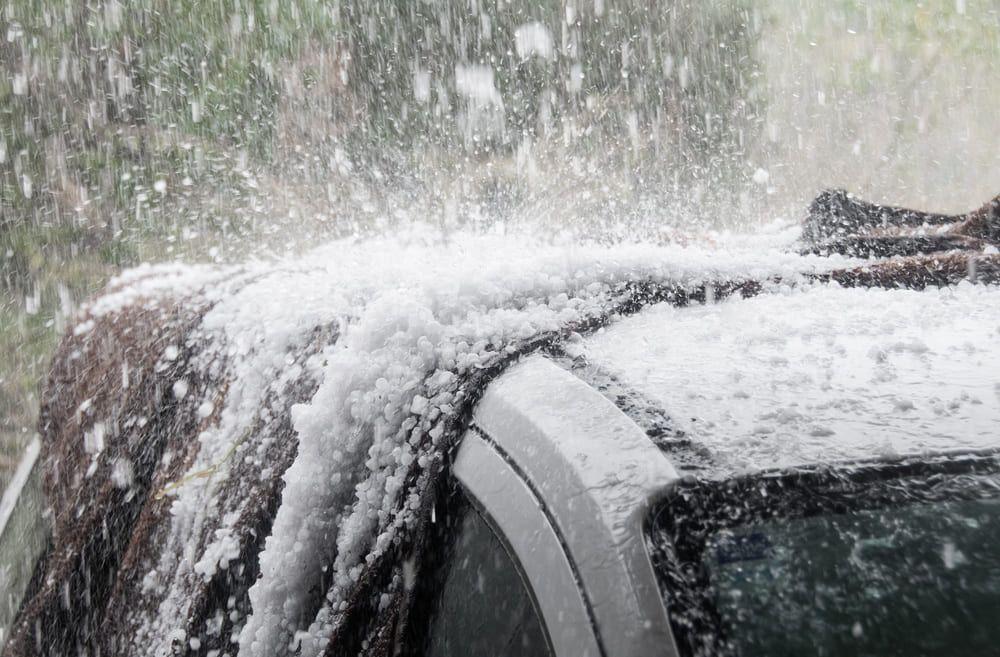
Hail damage isn’t always the same. The damage can range from minor dents to severe broken glass, depending on the storm.
Here’s a quick overview of hail damage for cars:
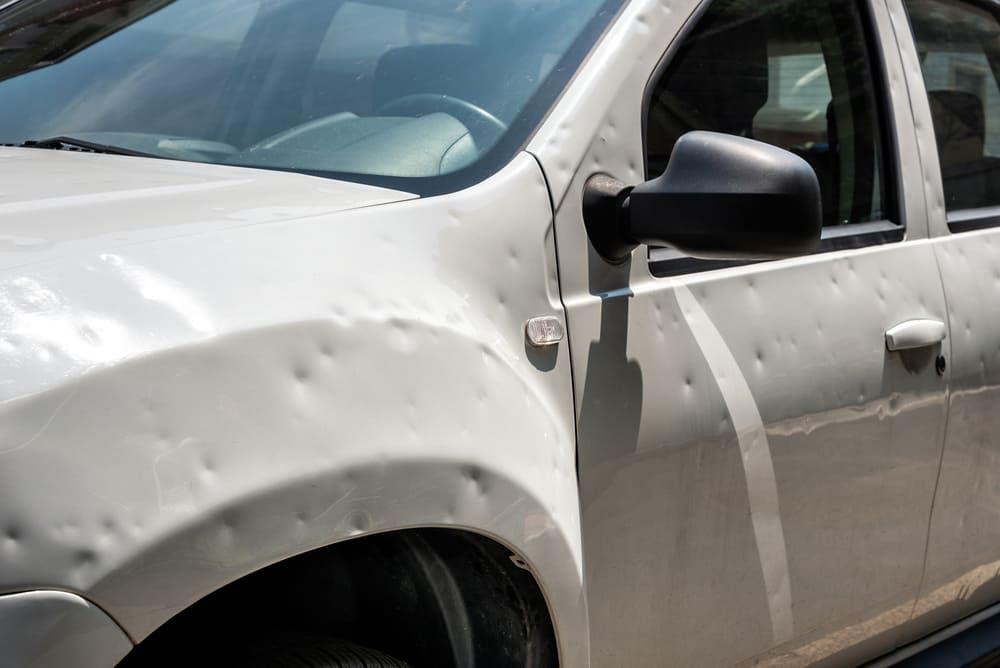
Dents — Hail can cause small to medium dents on the car’s surface. Large dents are extremely rare unless you’re caught in a freakishly strong hailstorm!
Paint damage — Like dents, hail can chip or scratch your car’s paint job. This looks unpleasant and can cause rust if left untreated.
Cracked or broken glass — If you’re unlucky, hail can shatter and crack windshields, mirrors, and side windows.
Puncture marks — Larger hailstones can puncture car roofs or hoods. This is rarer, though.
How to repair hail damage
If you’re unlucky enough to get caught in a hailstorm, don’t panic!
There are multiple ways to access hail damage repair, such as the following:
1. Professional hail damage repair
Most drivers should contact their local garage or dealership for professional advice. These experts can assess the damage and create a personalised repair plan.
This may include paint repair, paintless dent repair (PDR), new windows, or structural repairs.
2. DIY repairs
While garages are recommended, if you’re knowledgeable about cars, you may want to tackle the hail damage yourself.
For example, DIY dent removal kits can be used on minor dents. However, they may not be as seamless as professional repairs.
When to seek professional assistance
You should seek professional help if the hail damage is extensive (e.g. broken glass, large dents, or severe paint chipping). Trying to fix large areas of damage yourself may lead to further problems.
Can you get hail damage car insurance?
Yes, comprehensive car insurance typically covers hail damage, as it’s classed as weather-related damage. However:
You’ll need to pay your policy excess
Claiming may affect future premiums
Wear and tear exclusions still apply
Third-party and third-party fire and theft policies do not cover hail damage.
Will hail damage affect my car’s value?
Yes. Unrepaired hail damage can significantly reduce car resale value, even if the car drives perfectly.
Buyers often view visible dents as neglect, and dealers may reduce part-exchange offers accordingly. Repairing hail damage helps protect both appearance and value.
Can you drive with hail damage?
In most cases, yes, you can drive as hail damage is usually cosmetic.
However, driving may not be safe if:
Windscreens or windows are cracked
Sunroofs are damaged
Sharp metal edges are exposed
If visibility or structural integrity is compromised, repairs should be carried out immediately.
How to protect your car from hail damage
The best way to avoid hail damage repair is to protect your car from the get-go. You can do so in a few simple steps.
Regularly check the weather forecasts and alerts, particularly during the between-season periods.
Invest in a sturdy car cover or portable carport if you need to park outside.
Find secure indoor parking or shelter during forecasted hailstorms.
If you don’t have any shelter or a cover, use blankets or floor mats as improvised shelters!
How often do hailstorms happen in the UK?
Hailstorms aren’t very common in the UK, but they tend to appear from September to April during the transition between seasons.
According to the Met Office, hail is most common in the western parts of Britain since the area is closest to the North Atlantic and Irish Sea. When cold showers reach the cold land in winter, hail is created.
Fun Fact: Most hailstones are smaller than 25mm. However, they can be as small as 5 mm and grow up to 50mm!
Final thoughts
Getting caught in the rain isn’t always romantic. Hail damage on car repair costs can range from a few hundred pounds to several thousand, depending on severity and repair method.
However, early assessment and choosing paintless dent repair where possible can dramatically reduce costs. Hopefully, this article has helped you identify where to start and which repairs you need in 2026 and beyond.
Split the cost with Bumper
Give your car some TLC. You can use a car repair loan to split the cost of hail damage into interest-free repayments.
Apply online for up to £5,000 and choose from 1,000s of trusted repairers.

Split your car repair cost over monthly repayments interest-free.
Split the cost of your next repair
Other related articles from our blog
Advice
2 min read
This summer car washing method could be wrecking your vehicle
Every driver wants to have a clean car, but washing your car with this popular summer method could lead to premature ageing of the vehicle's tyres.

Advice
2 min read
Everyday driving mistake that could cost you thousands
Drivers are discovering that a simple driving habit could land them a big fine. Discover more about the everyday driving mistake that could cost you thousands.
Advice
5 min read
Tyre Replacement Cost Guide: £45 to £250+ (2026)
Tyre replacement costs range from £45 to over £250 for British drivers. See a list of tyre change costs and find out what your car needs online with Bumper.


