Catalytic Converter Replacement Cost – UK 2026
Because catalytic converters contain precious metals such as platinum, palladium and rhodium, they can cost anywhere from £400 to £2,000 or more to replace.
Thanks to Euro emissions regulations, catalytic converters have been essentially mandatory on all petrol cars since 1993, and all diesel cars since 1997. There are two main reasons why catalytic converters would need to be replaced: deterioration and theft. We'll cover costs for both in this article.
How much does it cost to replace a catalytic converter?
Like most vehicle parts, catalytic converters vary in price depending on the age, type and model of the car. The table below shows some indicative prices. A large factor is whether you replace it with an OEM part or an aftermarket part.
Vehicle Type | OEM Catalytic Converter Cost | Aftermarket catalytic converter cost |
|---|---|---|
Mid-range hatchback (Vauxhall Astra, Ford Fiesta etc) | £700 - £1,100 | £350 - £700 |
Saloon/Estate or SUV (Volvo V70, Honda CR-V) | £800 - £1,500 | £350 - £80 |
Luxury car (BMW 5 Series, Mercedes C-Class, Audi etc) | £800 - £1,700 | £550 - £850 |
Sports/performance car (Porsche 911, BMW Z4) | £1,100 - £1,700 | £800 - £2,500 |
Explore pay monthly catalytic converter repairs with Bumper.
What affects catalytic converter prices?
Alongside the usual effect of premium brands charging more for parts and labour, there are a number of other factors that affect the price you pay for a replacement catalytic converter.
OEM or aftermarket
OEM stands for original equipment manufacturer, or in other words, the parts are made or at least sold by the same company that makes the cars themselves. This generally means the parts of higher quality, but come with a larger price tag.
Aftermarket parts, sometimes referred to as pattern parts, are made by independent manufacturers, using broadly the same designs and specifications as the original.
Depending on the brand, aftermarket parts can be either as good as, or far worse than, the OEM parts in quality, consistency and longevity.
New or used
As catalytic converters ordinarily last a long time, it can be feasible to replace them with a second-hand part from a breaker or dismantler. This usually comes at a much lower cost, but often without any guarantee.
Some garages will not fit secondhand parts, due to the complications that arise if the part were to fail prematurely.
Sports cat or OEM equivalent
Often sold as performance upgrades for vehicles, so-called "sports cats" are often cheaper than the OEM or aftermarket OEM-equivalent, but claim to be just as effective.
The main selling point is often that they allow less air flow restriction, enabling higher performance from the engine.
As with any car part, the long term performance will depend on the quality of the particular part, but oftentimes the consensus on sports cats is that they work on reducing emissions for a period of time, but deteriorate after a few years.
Performance car or economy car
High performance cars or those with large engines, typically burn more fuel to create more horsepower than an equivalent run of the mill car. Despite this, they still need to meet the same emissions levels.
To accomplish this, manufacturers make the catalytic converters larger, and with more precious metals inside. This makes them more expensive to manufacture.
Hybrid or ICE
Hybrid cars also tend to have larger catalytic converters than purely petrol or diesel vehicles. Because a hybrid engine switches off and on rather than running continuously, the catalytic converter never stays fully up to temperature – and cats work least efficiently when cold. To compensate for these repeated cold-start emissions spikes, hybrids need a larger, more capable unit.
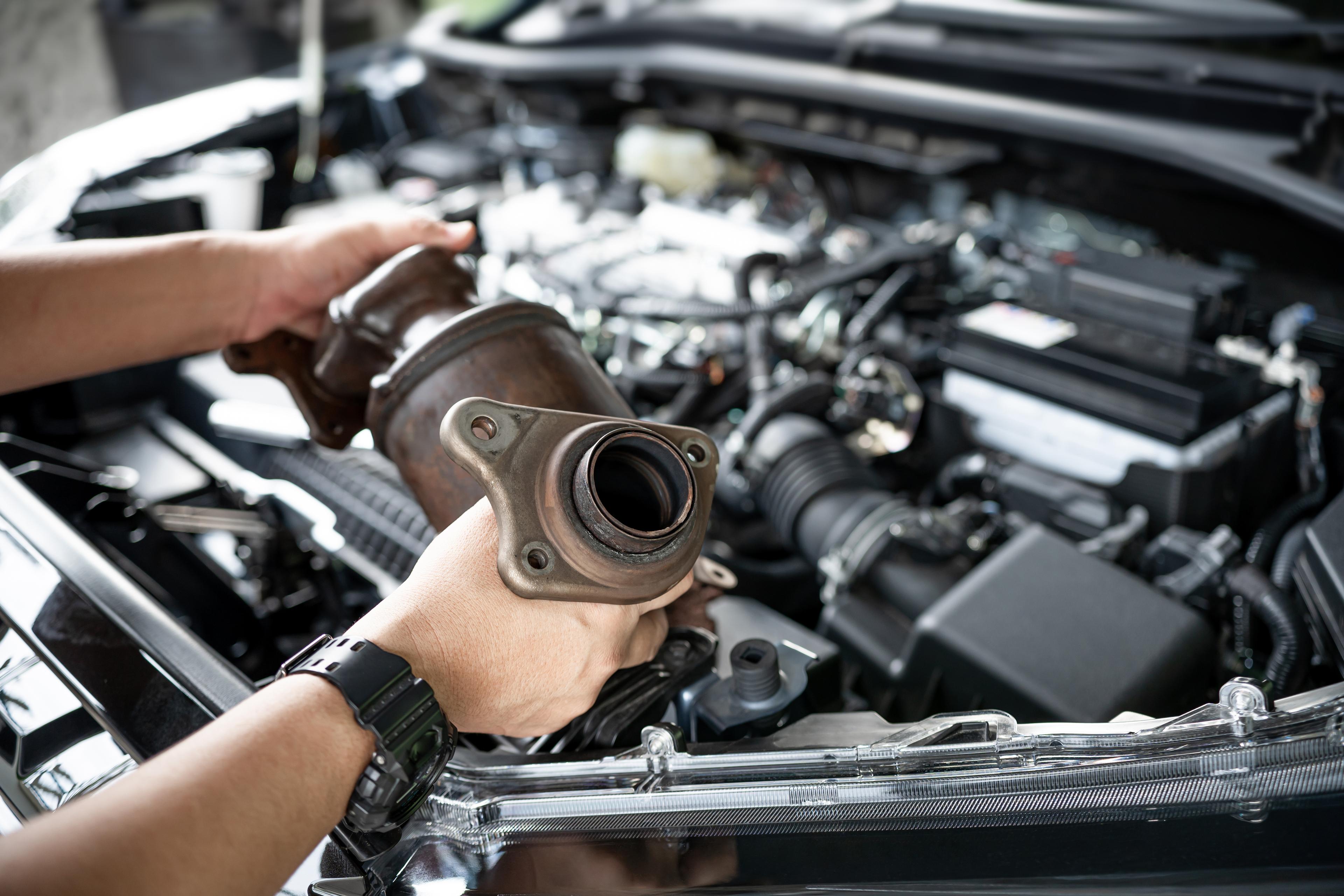
Do diesels have catalytic converters or DPF filters?
Diesel cars made after 2015 and sold in Europe, will have both. Almost all diesel cars have been fitted with catalytic converters since the late 1990s in order to meet emissions regulations.
Diesel catalytic converters do not work on the same chemical principle as petrols but still serve to remove harmful pollutants, alongside DPF filters, that work to reduce harmful particles of soot.
Need a replacement DPF? Find out the cost to replace a DPF here.
Catalytic converter theft and how to prevent it
Because catalytic converters are full of precious metals, their scrap value can be quite high. Depending on global markets, certain converters can be worth upwards of £800.
This coupled with the fact many are easily accessed from under the car, makes them a target for thieves.
There are a few methods to help prevent your catalytic converter from being stolen:
Fit a physical guard under the car – available for most car models, many garages will fit them for a reasonable fee
Park smartly – wherever possible, park in well lit areas or places with CCTV coverage. Parking next to a wall can also help restrict access. Naturally in a garage is the ideal solution
Fit a vibration alarm – in addition to your regular alarm, specialised alarms to detect the vibration of a thief cutting your exhaust are readily available
What to do if your catalytic converter gets stolen
The first thing you are likely to notice when your catalytic converter has been stolen is that the car’s exhaust will be incredibly loud.
Don't drive the car
It's important to not drive the car in this state without being inspected, as the remaining exhaust could catch the road, causing further damage, not to mention the harmful fumes that are likely to enter the car.
Record the details
Take photos, and make notes of when the theft is likely to have occurred. It may also be worth speaking to neighbours or close by businesses who have CCTV or doorbell cameras.
Notify the police
Report the theft on the non emergency phone number, detailing all the particulars. This is likely to be necessary to claim the cost from your insurer
Notify your insurance
Ring your insurance company, and explain the situation. They will likely open a claim, and start the process of collecting information and discussing next steps with you.
Bumper can help with catalytic converter replacement
If you’re expecting a big repair bill, for a catalytic converter, or any other car issue, Bumper’s zero percent interest car repair financing can help spread out the cost. Apply online or at the garage.

Split your car repair cost over monthly repayments interest-free.
Split the cost of your next repair
Other related articles from our blog
Advice
2 min read
Andy Burnham puts an end to 'rip-off' parking charges and scams
The Government's new Private Parking Code of Practice outlines plans to reduce the effect of inflated parking fines in private car parks. Learn more about the Government's new plans here.
Advice
1 min read
Why the clocks going back could mean a big problem for drivers
A campaign has revealed why the end of British Summer Time could spell disaster for some drivers. Discover how reduced visibility at night and the start of a well-known animal's breeding season could increase the risk of a collision for some motorists.

Advice
3 min read
What the new Budget could mean for drivers: full list of potential changes
A full list of potential changes for drivers in the Government's upcoming Autumn Budget. What the new Budget could mean for the cost of fuel and EV ownership.


