How Much Does Wheel Alignment Cost?
Wheel alignment costs in the UK can be anywhere from £30 to £60, depending on the service your car needs.
The condition and fine-tuning of your suspension and steering system is paramount to your car's safety, improving both handling and road holding performance. Not only that, but poor tracking or alignment can cause increased wear on your tyres.
In this blog, we explore how much wheel alignment costs and why it’s so crucial for British drivers.
Key takeaways
How much does wheel alignment cost?
Prices depend on the exact model of car and location, but expect to pay anywhere from £30 to £60 for a two-wheel alignment (either front or back) and £50 to £100 for a four wheel alignment.
It is always best to consult a specialist garage experienced with high-performance vehicles to get an accurate quote tailored to your car’s specific requirements.
You can also use car repair finance to split large repair costs into interest-free repayments. Perfect for those surprise fees!
Type of Alignment | Typical Cost (£) |
|---|---|
2-wheel (front or back) | 30–60 |
4-wheel | 50–100 |
Wheel alignment costs for high-end cars
High-performance vehicles or those with advanced steering and suspension systems often require more intricate wheel alignment procedures, which can increase costs.
Standard 4-wheel alignments typically range from £50 to £100 in the UK, depending on the vehicle and location.
For high-performance cars, such as a Porsche Taycan or Tesla Model S, alignment costs can be higher due to the specialised equipment and procedures required. Similarly, luxury brands like Lexus or Audi may charge between £85 and £150 for a 4-wheel alignment, reflecting the precision and expertise needed.
Vehicle Type | Typical 4-Wheel Alignment Cost (£) |
|---|---|
Standard vehicles | 50–100 |
High-performance cars (e.g., Porsche Taycan, Tesla Model S) | 100+ |
Luxury brands (e.g., Lexus, Audi) | 85–150 |
Does my car need 2 or 4 wheel alignment?
Most modern cars benefit from a 4-wheel alignment, which adjusts all wheels for optimal handling and tyre wear.
A 2-wheel alignment, usually front wheels only, may suffice for older rear-wheel-drive cars or simpler suspension setups. Your mechanic will let you know if this is appropriate.

What does wheel alignment mean?
Wheel alignment, or tracking as it’s often called here in the UK, is the process of adjusting a car's suspension and steering system to be in line with the manufacturer's specification.
It can involve anything from making sure the wheels are both pointing dead ahead, to complex suspension geometry adjustments.
How often should you have a wheel alignment done?
Most manufacturers recommend having a wheel alignment once every three years.
However, in areas with poor road conditions or for drivers who frequently mount curbs, it is advisable to have it checked at least once every two years.
Wheel alignment can have a significant impact on tyre wear, so it is often recommended to have at least a front wheel alignment performed when fitting new tyres to help maximise their lifespan.
How long does wheel alignment take?
A typical wheel alignment usually takes between 30 minutes and an hour.
As always, this depends on the car and the type of alignment. More complex vehicles or those requiring suspension adjustments may take longer.
What happens during wheel alignment?
The wheel alignment process can vary depending on the type of car and whether a 2-wheel or 4-wheel alignment is being performed.
While different alignment systems exist, the general procedure typically follows these steps:
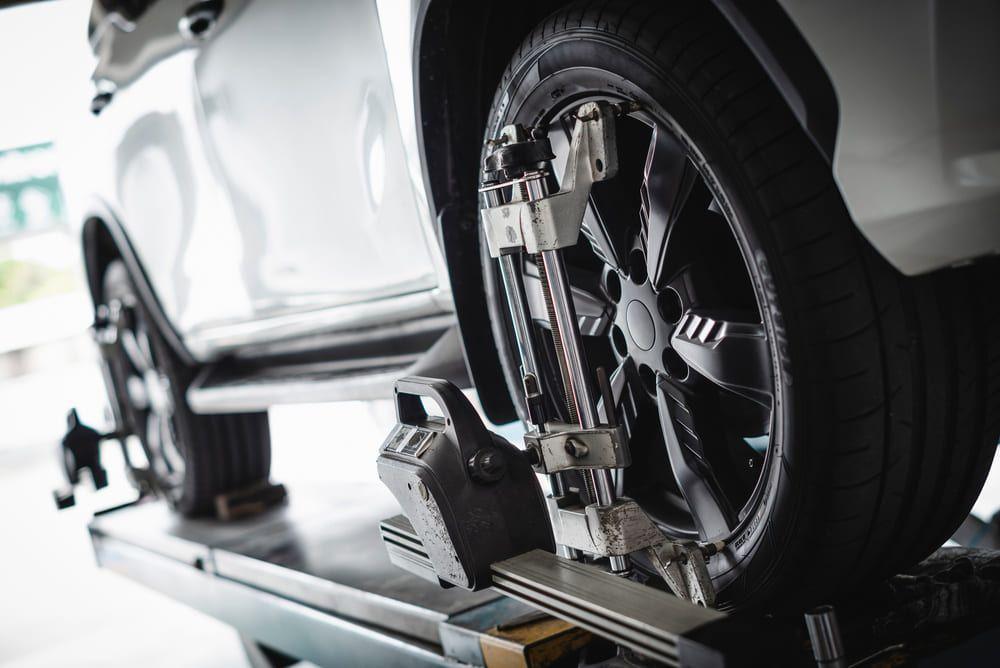
The technician drives the car onto a specialised alignment ramp and attaches devices to each wheel.
These devices reflect laser beams back to the alignment machine, allowing sensors to measure the exact angles of the wheels.
The current wheel angles are compared against the car manufacturer’s specifications.
With the car raised, the technician makes adjustments to the steering and suspension to bring the wheels into alignment.
Can I align my car myself?
While minor adjustments may seem doable, wheel alignment requires specialised equipment and precise measurements.
Attempting it yourself can result in uneven tyre wear or handling problems. It is strongly recommended to have a qualified mechanic perform the alignment, especially if you are unsure or have no previous experience.
5 signs you need a wheel alignment
As well as regular alignment checks, you should have your tracking done if any of the following things are happening.
1. Uneven tyre wear
Incorrect alignment can cause uneven tyre wear, leading to the need for replacement much sooner than usual.
If excessive wear appears on either the inside or outside of the tyre, have the alignment checked before fitting new tyres.
2. Pulling to one side of the road
When driving on a flat road with no steering input, the car should travel in a straight line.
If it does not, first check the tyre pressures. If the issue persists, the tracking is likely out of alignment.
3. Steering wheel doesn’t return to centre
If the steering wheel does not naturally return to the centre when turning, or feels as though it wants to continue turning, the tracking may be off.
This is often caused by an incorrect caster angle, but it can also indicate worn suspension joints, so it is advisable to have the suspension checked when carrying out the alignment
4. Steering wheel isn’t straight
If the steering wheel is not level while driving in a straight line, it may indicate that the alignment is off.
A knock from a curb or pothole can cause this, so the alignment should be checked as soon as possible.
5. Tyres squealing on turning
Squealing is often easiest to spot when manoeuvring at low speeds, such as while parking.
If the tyres make squeaking or chirping noises when turning, the tracking or alignment may be incorrect.

Benefits of regular wheel alignment
Like most car care, spending a little money and time on preventative maintenance can pay dividends in the long run.
Wheel alignment benefits include:
Tyres will last longer: having poor alignment is a sure-fire way to wear your tyres unevenly, meaning they’ll need replacing much sooner than normal
Better handling and control: the ideal suspension and steering settings are calculated by teams of engineers; having poor alignment undoes this work and can make the car feel unstable on the road.
Identifies problems sooner: While checking and adjusting your wheel alignment, the technician will be interacting with various components that are common MOT failures, such as worn ball joints, broken rubber dust seals and uneven tyre wear. This can give you a chance to rectify them before the dreaded MOT time.
Fuel efficiency: if your alignment is out, your engine is wasting energy scrubbing rubber off your tyres instead of propelling the car along the road.
Does an MOT check wheel alignment?
No, an MOT does not check wheel alignment.
Poor alignment can affect handling and safety, so it should be checked separately. Knowing the wheel alignment cost in the UK can help plan this essential maintenance and keep your car safe on the road.
What happens if you drive with poor wheel alignment?
If you’re driving with poor alignment, then you can expect any of the following:
Increased tyre wear: Poor alignment can wear tyres unevenly, requiring replacement much sooner.
Higher fuel consumption: Misalignment increases drag, causing fuel costs to rise.
Reduced handling: Incorrect suspension angles can compromise control, especially in wet conditions.
The dangers of poor wheel alignment
It may seem trivial if the steering wheel is off or the car does not track straight, but ignoring alignment issues can have serious consequences.
Poor tracking reduces grip, increasing the risk of losing control during an emergency manoeuvre.
Over time, uneven tyre wear from misalignment can further reduce their effectiveness and ability to disperse water.
Is it worth getting wheel alignment?
Yes, wheel alignment is worth it as it improves handling and prolongs tyre life. It also ensures safer driving in general, which is always a bonus!
As stated above, ignoring alignment can lead to uneven tyre wear, reduced grip, dangerous driving, and higher fuel costs. Keep these away with prompt servicing.
The takeaway
If you’ve noticed any of the five common signs, such as squealing tyres, an off-centre steering wheel, uneven tyre wear, or unusual driving behaviour, you should have your car checked and aligned promptly to avoid further issues.
Understanding the wheel alignment cost UK can help you plan for this essential maintenance, and hopefully, this blog has given you key insights for your car’s health.
Split the cost with Bumper
Wheel alignment costs can be a bummer when they’re unexpected.
However, with Bumper’s car repair loan, you can split the cost of repairs into monthly payments at no extra cost.
Apply online for up to £5,000 and choose from 1,000s of trusted repairers.

Split your car repair cost over monthly repayments interest-free.
Split the cost of your next repair
Other related articles from our blog

Advice
2 min read
Andy Burnham puts an end to 'rip-off' parking charges and scams
The Government's new Private Parking Code of Practice outlines plans to reduce the effect of inflated parking fines in private car parks. Learn more about the Government's new plans here.

Advice
1 min read
Why the clocks going back could mean a big problem for drivers
A campaign has revealed why the end of British Summer Time could spell disaster for some drivers. Discover how reduced visibility at night and the start of a well-known animal's breeding season could increase the risk of a collision for some motorists.

Advice
3 min read
What the new Budget could mean for drivers: full list of potential changes
A full list of potential changes for drivers in the Government's upcoming Autumn Budget. What the new Budget could mean for the cost of fuel and EV ownership.


